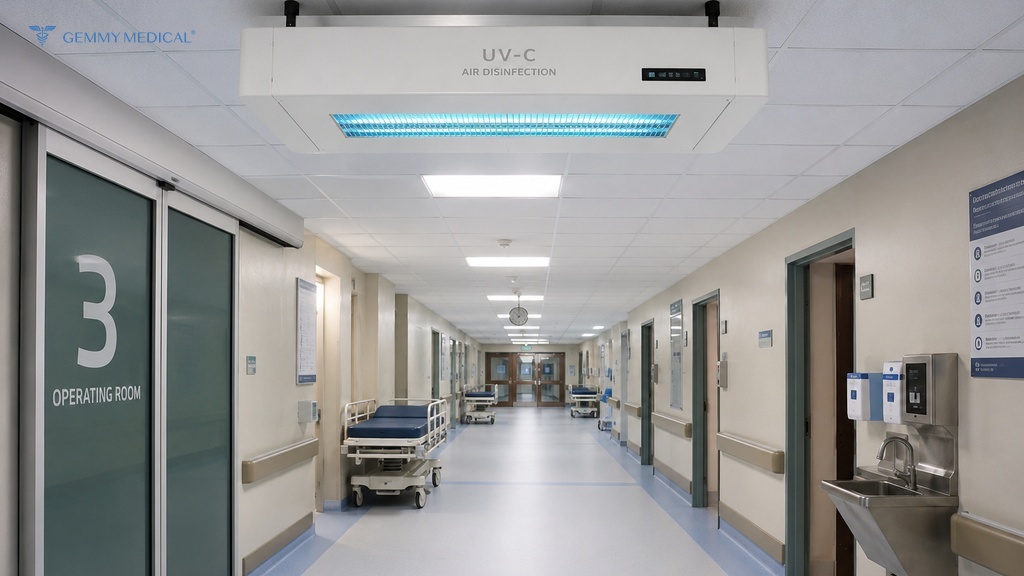
Introduction to Air Disinfection Systems
Infection prevention has become a cornerstone of modern healthcare, and maintaining optimal air quality in clinics and hospitals is essential to reducing the risk of airborne disease transmission. Air disinfection systems, such as those offered by Gemmy Medical, are designed to eliminate harmful airborne pathogens, including bacteria, viruses, and fungal spores, that can compromise patient safety and healthcare outcomes.
These systems go beyond traditional air filtration by actively neutralizing contaminants through advanced technologies like ultraviolet (UV) germicidal irradiation, HEPA filtration, and photocatalytic oxidation. Given the increased focus on infection control in healthcare facilities worldwide, particularly in densely populated regions like Southeast Asia and urban centers across the globe, air disinfection systems are indispensable tools for improving hospital air quality and safeguarding both patients and healthcare workers.
How Air Disinfection Systems Work
Air disinfection systems operate by capturing, inactivating, or destroying airborne microorganisms through a combination of mechanical and chemical processes. These systems typically consist of advanced filtration units, UV-C light chambers, or photocatalytic reactors, depending on the design and application.
For example, UV germicidal irradiation (UVGI) utilizes short-wavelength ultraviolet light to disrupt the DNA or RNA of microorganisms, rendering them incapable of replication. HEPA filters mechanically capture particles as small as 0.3 microns, ensuring the removal of dust, allergens, and microorganisms. Advanced models may also incorporate activated carbon filters to neutralize odors and volatile organic compounds (VOCs).
By integrating these technologies, air disinfection systems continuously circulate and cleanse the air in enclosed spaces, reducing the microbial load and preventing cross-contamination in sensitive healthcare environments.
Clinical Benefits in Hospitals and Clinics
Air disinfection systems offer multiple clinical benefits that directly impact patient outcomes and staff safety in hospitals and clinics. The following advantages are particularly noteworthy:
- Reduced Nosocomial Infections: By actively neutralizing airborne pathogens, these systems help decrease the incidence of healthcare-associated infections (HAIs), which are a significant burden on healthcare systems worldwide.
- Enhanced Patient Recovery: Cleaner air quality reduces the risk of secondary infections, promoting faster healing for post-operative and immunocompromised patients.
- Improved Staff Safety: Healthcare workers are protected from airborne pathogens, lowering the risk of occupational exposure to infectious diseases.
- Contamination Control in Critical Areas: In operating rooms, ICUs, and isolation wards, air disinfection systems maintain sterile conditions crucial for patient care.
These systems are particularly valuable in high-risk settings, such as during respiratory disease outbreaks, and are a vital component of comprehensive infection control protocols.
Key Technologies in Air Disinfection
The effectiveness of air disinfection systems lies in the technologies they employ. Below are some of the most commonly used methods:
- UV-C Germicidal Irradiation: UV-C light, with a wavelength of 200-280 nanometers, destroys the genetic material of microorganisms, making them nonviable. This technology is widely used in upper-room air disinfection and HVAC systems.
- HEPA Filtration: High-Efficiency Particulate Air (HEPA) filters trap 99.97% of particles, including dust, pollen, and bacteria, ensuring a high level of air purification.
- Photocatalytic Oxidation: This technology combines UV light with a photocatalyst, usually titanium dioxide, to produce hydroxyl radicals that break down organic and inorganic pollutants.
- Electrostatic Precipitation: Charged particles are attracted to oppositely charged plates, removing them from the air.
Each of these technologies has specific applications and efficacy levels, allowing healthcare facilities to select the most appropriate solution for their needs.
Choosing the Right Air Disinfection System
Selecting the right air disinfection system for a healthcare facility requires careful consideration of multiple factors:
- Room Size and Airflow: Ensure the system has the capacity to handle the volume of air in the space effectively.
- Pathogen Load: High-risk areas, such as operating rooms, require systems with advanced capabilities like UVGI or HEPA filtration.
- Compliance Standards: Verify that the system meets local and international standards, such as ISO 16890 for air filtration and ASHRAE guidelines.
- Ease of Maintenance: Choose systems with accessible components for regular cleaning and filter replacement.
Consulting with experts like the team at Gemmy Medical can help healthcare administrators identify systems that align with their operational and clinical requirements.
Best Practices for Implementation
Proper implementation is critical to maximizing the effectiveness of air disinfection systems. Consider the following best practices:
- Conduct a Site Assessment: Evaluate the facility's layout, air exchange rates, and specific areas of concern to determine optimal system placement.
- Regular Maintenance: Schedule routine inspections and replace filters or UV lamps as recommended by the manufacturer.
- Staff Training: Ensure that all relevant personnel are trained in operating and maintaining the system to avoid misuse.
- Continuous Monitoring: Implement air quality monitoring to assess system performance and make adjustments as needed.
Adhering to these guidelines ensures that air disinfection systems function effectively and contribute to a safer healthcare environment.
Case Studies and Real-World Applications
Real-world applications of air disinfection systems demonstrate their efficacy and versatility. For instance:
- Urban Hospitals in Southeast Asia: A multi-hospital network in Bangkok implemented UVGI systems in ICUs, reducing airborne microbial counts by over 90% within one month.
- Rural Clinics in Africa: Compact HEPA-based systems were deployed in rural maternity wards, leading to a measurable decline in neonatal infections.
- Emergency Rooms in the United States: Portable air disinfection units were used during the COVID-19 pandemic to manage patient overflow, maintaining safe air quality levels.
These examples underscore the adaptability of air disinfection systems across diverse healthcare settings and geographic locations.
Compliance and Maintenance Considerations
Compliance with regulatory standards and regular maintenance are essential for the effective operation of air disinfection systems. Key considerations include:
- Regulatory Compliance: Ensure the system meets guidelines from organizations such as the World Health Organization (WHO), Centers for Disease Control and Prevention (CDC), and local health authorities.
- Documentation: Maintain detailed records of system maintenance, filter replacements, and performance tests for audit purposes.
- Manufacturer Recommendations: Follow the manufacturer's instructions for cleaning, component replacement, and periodic inspections.
By prioritizing compliance and maintenance, healthcare facilities can ensure the longevity and reliability of their air disinfection systems.
Frequently Asked Questions
What is the primary purpose of an air disinfection system in hospitals?
The primary purpose is to reduce airborne pathogens, improving air quality and minimizing the risk of healthcare-associated infections (HAIs) in critical environments such as operating rooms, ICUs, and patient wards.
How does UV-C technology work in air disinfection systems?
UV-C light disrupts the DNA or RNA of microorganisms, rendering them unable to reproduce or cause infections. It is particularly effective against bacteria, viruses, and fungal spores.
Are air disinfection systems effective against COVID-19?
Yes, many air disinfection systems, particularly those using HEPA filtration and UV-C technology, have been shown to effectively capture and neutralize SARS-CoV-2, the virus responsible for COVID-19.
How often should filters in air disinfection systems be replaced?
Filter replacement frequency depends on the system and usage. Generally, HEPA filters should be replaced every 6-12 months, but always follow the manufacturer's guidelines.
Can air disinfection systems be used in small clinics?
Yes, compact models are available for smaller spaces, providing the same level of air purification as larger systems but tailored to smaller environments.
What are the energy consumption considerations for these systems?
Modern air disinfection systems are designed to be energy-efficient, but energy consumption varies by model and technology. Always review the specifications to ensure alignment with your energy efficiency goals.
Conclusion
Air disinfection systems are vital tools for enhancing hospital air quality and preventing the spread of airborne pathogens. By leveraging advanced technologies such as UV-C irradiation and HEPA filtration, these systems contribute to safer healthcare environments for patients and staff alike. Healthcare administrators should carefully evaluate system capabilities, compliance standards, and maintenance requirements to maximize their investment in these essential devices. For customized solutions, the team at Gemmy Medical, headquartered in Shanghai, China, is ready to assist.
Disclaimer: This article is for informational purposes only and does not replace professional medical advice. For product inquiries or customized solutions, contact the Gemmy Medical team at info@gemmytec.com.
Emerging Trends in Air Disinfection Technologies
As the healthcare landscape continues to evolve, so too do the technologies underpinning air disinfection systems. Recent innovations are pushing the boundaries of what is possible, enhancing both the efficiency and accessibility of these systems. Below are some of the most exciting emerging trends:
Integration with IoT and Smart Systems
Modern air disinfection systems are increasingly incorporating Internet of Things (IoT) technology, enabling real-time monitoring and remote control. For example, IoT-enabled systems can track air quality metrics such as particulate counts, volatile organic compounds (VOC) levels, and microbial load. Facility administrators can receive alerts and performance reports via mobile apps or cloud-based dashboards, allowing for timely interventions. This is particularly beneficial in large healthcare facilities where monitoring multiple zones simultaneously can be challenging.
Hybrid Systems Combining Multiple Technologies
Instead of relying on a single method, hybrid systems are now being developed that combine multiple disinfection technologies, such as UV-C irradiation, HEPA filtration, and activated carbon. These systems are designed to address a wide range of contaminants, from microorganisms to chemical pollutants, in a single device. For instance, a hybrid system might use UV-C light to neutralize pathogens while a HEPA filter captures particulate matter, offering a comprehensive solution for air quality improvement.
Portable and Modular Units
Portability and modularity are becoming increasingly important, especially in scenarios like emergency response or temporary healthcare setups. Portable air disinfection units are lightweight and easy to deploy, making them ideal for use in field hospitals, outpatient clinics, and even patient transport vehicles. Modular systems, on the other hand, allow facilities to scale their air disinfection capabilities based on changing needs, such as during an infectious disease outbreak.
Energy-Efficient and Eco-Friendly Designs
Energy efficiency is a growing concern, particularly as healthcare facilities aim to reduce their environmental footprint. Newer air disinfection systems are being designed to consume less power while maintaining high efficacy. Innovations such as LED-based UV-C lamps and energy-efficient motors in air filtration systems are examples of this trend. Additionally, some systems now feature recyclable or biodegradable components, further contributing to environmental sustainability.
Antiviral Coatings on Surfaces
An emerging area of research is the application of antiviral coatings to the internal surfaces of air disinfection systems. These coatings can enhance the system's ability to neutralize pathogens by providing an additional layer of protection. For example, surfaces coated with silver nanoparticles or titanium dioxide can actively kill bacteria and viruses that come into contact with them, reducing the risk of microbial buildup within the unit.
By staying abreast of these emerging trends, healthcare facilities can not only improve patient outcomes but also future-proof their infrastructure against evolving challenges in air quality management.
Financial and Operational Considerations
While the benefits of air disinfection systems are clear, their implementation requires careful financial and operational planning. Below are key considerations for healthcare administrators:
Initial Investment vs. Long-Term Savings
The upfront cost of air disinfection systems can be significant, especially for large healthcare facilities. However, this investment often translates into long-term savings. By reducing healthcare-associated infections (HAIs), these systems can lower patient treatment costs and minimize staff absenteeism due to illness. Additionally, many governments and health organizations offer grants or incentives for adopting advanced infection control technologies, which can offset initial expenses.
Cost of Maintenance
Routine maintenance is essential for ensuring the effectiveness of air disinfection systems. The costs associated with replacing HEPA filters, UV-C bulbs, or other components should be factored into the facility's budget. Opting for systems with easily replaceable parts and long-lasting components can help reduce ongoing expenses. Some manufacturers also offer maintenance contracts, which can simplify budgeting and ensure compliance with regulatory standards.
Energy Efficiency and Operational Costs
Energy consumption is another critical factor. While older systems may be energy-intensive, newer models are designed with energy efficiency in mind. Administrators should evaluate the energy ratings of different systems and consider models that offer the best balance between performance and operational costs. For instance, systems with variable-speed fans can adjust airflow based on real-time needs, reducing energy use during low-demand periods.
Scalability and Future-Proofing
Healthcare facilities should consider the scalability of air disinfection systems to accommodate future needs. Modular systems that can be expanded or upgraded are particularly valuable in this regard. For example, during the COVID-19 pandemic, facilities that had scalable air disinfection infrastructure were better equipped to handle surges in patient numbers and increased infection control demands.
Return on Investment (ROI)
Calculating the ROI of an air disinfection system involves more than just the initial cost. Factors like reduced infection rates, improved patient and staff safety, and enhanced reputation for quality care all contribute to the system's value. Facilities can also measure ROI by assessing metrics such as reduced hospital readmissions due to HAIs or shorter patient recovery times attributable to cleaner air quality.
Global Impact of Air Disinfection Systems
Air disinfection systems are not just a luxury for high-income countries—they have the potential to transform healthcare across the globe. Below are some examples of their broader impact:
Reducing Healthcare Disparities
In low-resource settings, where access to advanced healthcare infrastructure is limited, portable and cost-effective air disinfection systems can play a crucial role in improving patient outcomes. For example, solar-powered air disinfection units are being developed for use in remote areas without reliable electricity, ensuring clean air in clinics and hospitals.
Combatting Global Pandemics
The COVID-19 pandemic highlighted the importance of airborne infection control. Air disinfection systems became a critical tool for limiting the spread of the virus in hospitals, nursing homes, and public spaces. As new infectious diseases emerge, these systems will continue to be a frontline defense in global health crises.
Improving Workplace Safety Beyond Healthcare
While their primary applications are in hospitals and clinics, air disinfection systems are increasingly being adopted in other sectors, such as schools, offices, and public transportation. By enhancing air quality in these environments, the systems contribute to overall public health and reduce the burden on healthcare systems.
Environmental Benefits
Advanced air disinfection systems not only improve human health but also have environmental benefits. By reducing the need for chemical disinfectants, these systems help minimize chemical waste and pollution. Energy-efficient designs further contribute to global sustainability goals, aligning with broader efforts to combat climate change.
As the adoption of air disinfection systems grows, their cumulative impact on global health and sustainability will only increase, making them a cornerstone of modern public health strategy.


