Table of Contents
What is a Composite Dressing?
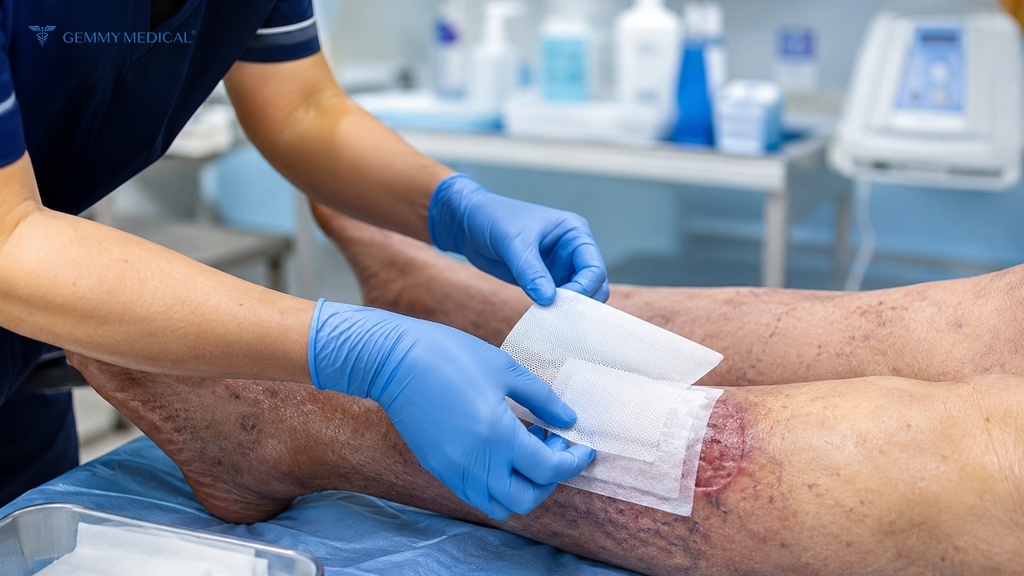
A composite dressing, also known as a hybrid or combination wound dressing, is a versatile, multi-layer wound care product designed to address mixed wound types. These dressings integrate multiple components into a single product to provide comprehensive protection and healing support. Typically, composite dressings include an absorbent layer, a semi-permeable barrier, and an adhesive border to secure the dressing in place.
This type of dressing is particularly useful for wounds exhibiting complex characteristics, such as a mix of exudation levels, infection risk, and anatomical challenges. Composite dressings are commonly used for chronic wounds, such as venous leg ulcers, diabetic foot ulcers, and pressure injuries, as well as acute wounds, including surgical incisions and traumatic injuries.
At Gemmy Medical, headquartered in Shanghai, China, we prioritize clinical innovation. Our composite dressings are engineered using evidence-based materials to address the diverse needs of healthcare professionals worldwide.
How Composite Dressings Work
Composite dressings work by combining the functionalities of multiple layers to manage the wound environment effectively. Each layer is purpose-built to perform a specific function, contributing to optimal wound healing:
- Absorbent Layer: This layer is designed to manage exudate levels, preventing maceration of the surrounding skin while maintaining a moist wound environment conducive to healing.
- Barrier Layer: The semi-permeable outer layer provides protection against external contaminants, such as bacteria, while allowing moisture vapor to escape, preventing excessive moisture accumulation.
- Adhesive Border: The adhesive border helps secure the dressing in place, reducing the need for frequent changes and minimizing disruption to the wound bed.
By integrating these layers, composite dressings create an environment that supports autolytic debridement, reduces infection risk, and facilitates better healing outcomes.
Benefits of Composite Dressings
Composite dressings offer several key advantages over traditional single-layer dressings. These benefits include:
- Versatility: Suitable for a wide range of wound types, from low to moderately exuding wounds, and effective in both acute and chronic conditions.
- Ease of Use: The all-in-one design simplifies dressing selection and application, saving time for clinicians and caregivers.
- Reduced Dressing Changes: High absorbency and secure adhesion reduce the frequency of dressing changes, improving patient comfort and cost-efficiency.
- Infection Control: The barrier layer protects against bacterial contamination, lowering the risk of wound infection.
- Skin Protection: Adhesive borders are often designed to be gentle on the surrounding skin, minimizing trauma during dressing removal.
These advantages make composite dressings a preferred choice for wound care specialists and healthcare facilities aiming to improve patient outcomes while optimizing resource use.
Who Can Benefit from Composite Dressings?
Composite dressings are suitable for a wide range of patient populations, including those with:
- Chronic Wounds: Patients with diabetic foot ulcers, pressure injuries, or venous leg ulcers often benefit from the moisture management and protective features of composite dressings.
- Acute Wounds: Surgical sites, traumatic wounds, and first- and second-degree burns are commonly treated with composite dressings due to their ability to balance exudate management and infection prevention.
- Mixed Wound Types: Wounds that exhibit a combination of characteristics, such as partial-thickness burns with areas of high exudation and others requiring protection, are ideal candidates.
Additionally, patients with fragile or sensitive skin, such as the elderly or those undergoing long-term care, often benefit from the gentle adhesive properties of composite dressings.
How to Choose the Right Composite Dressing
Selecting the appropriate composite dressing involves careful consideration of the wound’s characteristics and the patient’s needs. Key factors to evaluate include:
- Exudate Level: Choose a dressing with appropriate absorbency to manage the wound’s moisture levels effectively.
- Wound Size and Shape: Ensure that the dressing dimensions and adhesive border are adequate to cover the wound fully and adhere securely.
- Skin Sensitivity: For patients with sensitive or fragile skin, opt for dressings with hypoallergenic adhesives.
- Infection Risk: If the wound is at high risk of infection, consider a composite dressing with additional antimicrobial properties.
Gemmy Medical offers a range of composite dressings tailored to meet these diverse needs, ensuring clinicians can find the right product for every scenario.
Best Practices for Application and Use
Proper application and management of composite dressings can significantly impact wound healing outcomes. Follow these best practices:
- Clean and Prepare the Wound: Begin by cleansing the wound with a suitable wound cleanser or saline solution to remove debris and reduce bacterial load.
- Dry the Surrounding Skin: Gently pat the periwound skin dry to ensure proper adhesion of the dressing.
- Apply Without Stretching: Place the dressing over the wound without stretching the adhesive border to avoid skin tension or irritation.
- Monitor and Change as Needed: Inspect the wound regularly and replace the dressing according to the manufacturer’s guidelines or when exudate levels exceed the dressing’s absorption capacity.
Adhering to these steps ensures that the dressing functions as intended and supports optimal wound healing.
Clinical Evidence Supporting Composite Dressings
Numerous clinical studies have demonstrated the efficacy of composite dressings in wound care. Research highlights include:
- A randomized controlled trial showing faster healing rates in venous leg ulcers treated with composite dressings compared to traditional gauze.
- Evidence supporting reduced infection rates in surgical wounds covered with composite dressings, attributed to their barrier properties.
- Studies indicating improved patient satisfaction due to less frequent dressing changes and enhanced comfort.
At Gemmy Medical, we integrate these findings into our product development, ensuring our composite dressings are grounded in robust clinical evidence.
Composite Dressings for Home vs. Clinical Use
Composite dressings are suitable for both clinical and home care settings. However, their usage may differ slightly depending on the environment:
- Clinical Use: In hospitals and outpatient clinics, composite dressings are often applied by healthcare professionals for complex wounds, ensuring precise placement and monitoring.
- Home Use: For patients managing wounds at home, composite dressings offer simplicity and ease of use, requiring minimal training for caregivers or patients themselves.
Gemmy Medical provides detailed usage guides and training resources to support both clinical and home care applications.
FAQ
What types of wounds are best suited for composite dressings?
Composite dressings are ideal for wounds with mixed characteristics, including moderate exudation, infection risk, and sensitive periwound skin. They are commonly used for venous leg ulcers, diabetic foot ulcers, surgical wounds, and traumatic injuries.
How often should composite dressings be changed?
The frequency of dressing changes depends on the wound’s exudate levels and the specific product used. Typically, composite dressings can remain in place for 3–5 days unless saturated or compromised.
Can composite dressings be used on infected wounds?
Some composite dressings include antimicrobial properties, making them suitable for managing infected wounds. However, always consult a clinician for appropriate wound management strategies.
Are composite dressings suitable for pediatric patients?
Yes, composite dressings can be used for pediatric patients, particularly for wounds requiring moisture management and protection. Select options with gentle adhesives to minimize discomfort during removal.
What is the shelf life of a composite dressing?
The shelf life varies by manufacturer but typically ranges from 2 to 5 years. Always check the product packaging for expiration dates and store dressings according to the manufacturer’s recommendations.
Do composite dressings require secondary fixation?
No, most composite dressings feature an adhesive border, eliminating the need for secondary fixation. However, additional securing methods may be used in cases of high mobility or challenging anatomical locations.
Conclusion
Composite dressings provide an advanced, multi-layered solution for managing mixed wound types. Their versatility, ease of use, and clinical efficacy make them a valuable tool for healthcare professionals and caregivers alike. By integrating multiple functionalities into a single product, composite dressings contribute to improved patient outcomes and streamlined wound care workflows.
Disclaimer: This article is for informational purposes only and does not replace professional medical advice. For product inquiries or customized solutions, contact the Gemmy Medical team at info@gemmytec.com.
Advantages for Healthcare Providers
While the primary focus of composite dressings is on improving patient outcomes, they also offer distinct benefits for healthcare providers and institutions. These advantages include:
- Streamlined Inventory Management: Composite dressings combine multiple functions into a single product, reducing the need for stocking various types of dressings. This simplifies inventory management in hospitals, clinics, and long-term care facilities.
- Time Efficiency: The all-in-one design allows healthcare professionals to quickly select and apply the dressing, saving valuable time during wound care procedures.
- Cost-Effectiveness: While composite dressings may have a higher initial cost compared to single-layer dressings, their ability to reduce dressing changes and prevent complications ultimately lowers overall treatment costs.
- Educational Simplicity: Composite dressings are straightforward to use, making it easier to train healthcare personnel or caregivers on how to apply and manage them effectively.
By improving workflow efficiency and reducing the risk of errors, composite dressings help healthcare providers deliver high-quality care while optimizing their resources.
Special Use Cases for Composite Dressings
While composite dressings are versatile, they are especially beneficial in certain scenarios where traditional dressings may fall short:
- Palliative Care: In palliative care settings, the focus is often on maximizing patient comfort rather than achieving complete wound healing. Composite dressings minimize dressing changes and reduce pain during removal, making them highly suitable for this patient population.
- Mobile Patients: Patients who are ambulatory or have high levels of mobility often experience challenges with dressing displacement. Composite dressings, with their adhesive borders, provide secure placement even during movement.
- Wounds in Difficult Locations: Wounds located in areas like joints, under folds of skin, or near high-friction zones benefit from the flexibility and secure adhesion of composite dressings.
- Post-Surgical Recovery: After surgery, reducing infection risk while managing drainage is critical. Composite dressings offer the dual advantage of a protective barrier and effective exudate management, ideal for surgical sites.
These specialized applications underscore the importance of composite dressings in addressing unique patient needs and complex wound characteristics.
Environmental Impact of Composite Dressings
As healthcare systems worldwide strive toward sustainability, the environmental impact of medical products is coming under increasing scrutiny. Composite dressings offer certain advantages in this area:
- Reduced Waste: By combining multiple functionalities into a single product, composite dressings reduce the need for additional materials, such as secondary fixations or supplementary layers, thereby minimizing medical waste.
- Longer Wear Time: The extended wear time of composite dressings reduces the frequency of dressing changes, leading to lower consumption of resources over the course of treatment.
- Innovative Materials: Companies like Gemmy Medical are exploring the use of biodegradable or recyclable components to further reduce the ecological footprint of wound care products.
While composite dressings are inherently more efficient in terms of resource use, ongoing advancements in material science and manufacturing processes will continue to make them even more environmentally friendly.
Common Mistakes to Avoid
Using composite dressings effectively requires a clear understanding of best practices. Here are some common mistakes to avoid:
- Incorrect Sizing: Applying a dressing that is either too small or too large for the wound can compromise its effectiveness. Always measure the wound and choose a dressing that provides complete coverage with space for the adhesive border.
- Ignoring Periwound Skin: While the focus is often on the wound itself, neglecting the surrounding skin can lead to irritation or maceration. Ensure that the periwound area is clean and dry before applying the dressing.
- Overuse of Antimicrobial Dressings: Using antimicrobial composite dressings unnecessarily can contribute to antimicrobial resistance. Reserve these dressings for wounds with confirmed or high risk of infection.
- Premature Removal: Removing the dressing too early disrupts the wound healing process and exposes the wound to contaminants. Follow the manufacturer’s guidelines for wear time.
- Improper Storage: Storing composite dressings in unsuitable conditions (e.g., high humidity or extreme temperatures) can degrade their quality. Always adhere to storage recommendations provided by the manufacturer.
By avoiding these pitfalls, healthcare providers and caregivers can ensure that composite dressings deliver their full therapeutic potential.
Future Trends in Composite Dressings
Wound care technology is constantly evolving, and composite dressings are no exception. Here are some emerging trends that may shape their future:
- Smart Dressings: Innovations in sensor technology are leading to the development of "smart" composite dressings that monitor wound conditions, such as moisture levels and bacterial activity, and provide real-time data to clinicians.
- Customized Solutions: Advances in 3D printing and personalized medicine may enable the creation of composite dressings tailored to the unique anatomy and wound characteristics of individual patients.
- Biological Enhancements: Incorporating growth factors, stem cells, or bioactive compounds into composite dressings could accelerate healing and regenerate damaged tissue.
- Eco-Friendly Options: As sustainability becomes a priority, manufacturers are exploring the use of renewable materials, biodegradable components, and energy-efficient production methods for composite dressings.
- Expanded Accessibility: Efforts to reduce costs and improve distribution channels may make advanced composite dressings more widely available, particularly in underserved regions.
These trends highlight the exciting potential of composite dressings to continue improving wound care outcomes while addressing broader healthcare challenges.
Conclusion
Composite dressings represent a significant advancement in wound care, combining multiple functions into a single, efficient product. Their versatility, ease of use, and ability to address complex wound characteristics make them invaluable for both acute and chronic wound management. Whether used in clinical settings or at home, composite dressings simplify care protocols while enhancing patient comfort and outcomes.
As you evaluate wound care options, consider the unique benefits and applications of composite dressings. With ongoing innovation and growing clinical evidence supporting their efficacy, these dressings are poised to remain a cornerstone of modern wound management.
At Gemmy Medical, we are committed to developing high-quality composite dressings that meet the diverse needs of healthcare providers and patients. Contact us at info@gemmytec.com for product inquiries or to learn more about how our solutions can support your wound care goals.


