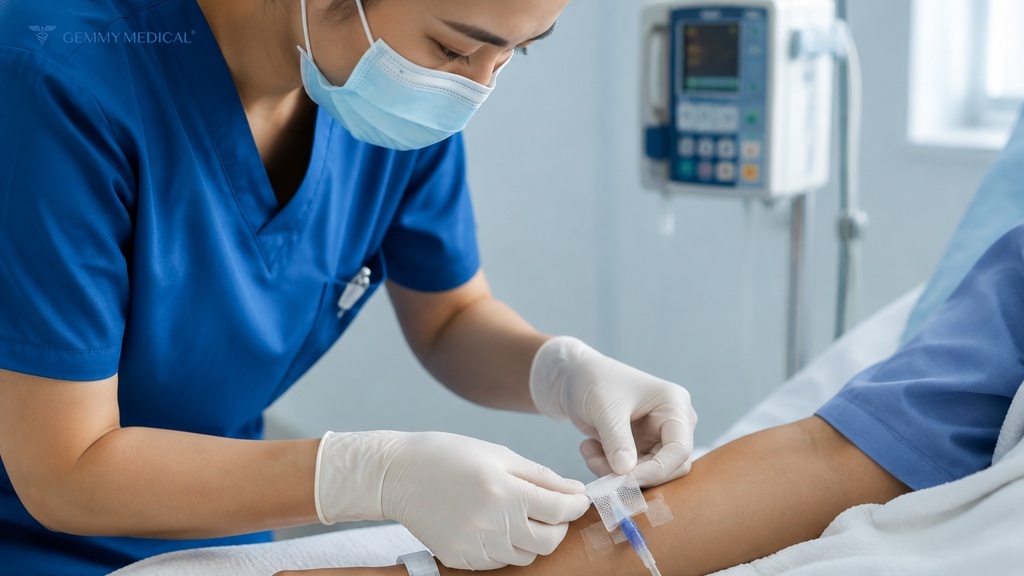
Introduction to IV Securement Dressing
Intravenous (IV) therapy is a cornerstone of modern medical treatment, allowing for the direct administration of medications, fluids, and nutrients into a patient's bloodstream. To ensure the efficacy and safety of IV therapy, securement of the catheter at the infusion site is crucial. IV securement dressings, such as those offered by Gemmy Medical, are designed to stabilize the catheter, reduce the risk of dislodgement, and minimize infection rates. These dressings provide a reliable solution for healthcare professionals managing IV access, ensuring that the catheter remains in place securely while allowing for patient comfort and mobility.
Mechanism of Action
IV securement dressings work by adhering firmly to the skin and catheter, creating a barrier that prevents external contaminants from reaching the infusion site. Most dressings are made with advanced medical adhesive tape, which offers both flexibility and strength. This adhesive technology ensures the dressing remains intact even during patient movement, while its permeability allows the skin to breathe, reducing the risk of skin irritation and maceration. The dressing typically includes a transparent window to facilitate ongoing site inspection without removal, thereby minimizing exposure to potential pathogens.
Clinical Benefits of IV Securement Dressing
The use of IV securement dressings offers numerous clinical benefits that contribute to improved patient outcomes. Primarily, these dressings reduce the risk of catheter-related bloodstream infections (CRBSIs) by providing a sterile barrier over the site. They also enhance catheter stability, which is vital for preventing accidental dislodgement, a common issue that can lead to therapy interruption and patient distress. Additionally, IV securement dressings can decrease the frequency of dressing changes, thereby reducing nursing time and healthcare costs. The products from Gemmy Medical are globally trusted for their reliability and effectiveness, making them a preferred choice in diverse healthcare settings.
Who Should Use IV Securement Dressing?
IV securement dressings are essential for a wide range of healthcare providers, including hospitals, outpatient clinics, home healthcare agencies, and long-term care facilities. Clinicians, particularly those specializing in infusion therapy, benefit from using these dressings to ensure optimal catheter management. In home settings, patients receiving IV therapy can also utilize these dressings to maintain site hygiene and stability. Procurement managers in healthcare institutions should consider the adoption of IV securement dressings as part of their infection control strategy, given the significant role these products play in improving patient safety and care quality.
How to Choose the Right IV Securement Dressing
Choosing the appropriate IV securement dressing involves evaluating several key factors. First, consider the dressing's adhesive strength and skin compatibility, ensuring it can secure the catheter without causing irritation. The size and shape of the dressing should match the catheter type and infusion site location. Transparency is a critical feature, allowing healthcare providers to monitor the area without removing the dressing. Additionally, look for dressings with antimicrobial properties to further reduce infection risk. Gemmy Medical offers a variety of configurations and sizes to meet specific clinical needs.
Best Practices for Application
To maximize the efficacy of IV securement dressings, adhere to best practices during application. Begin by cleaning the skin with an appropriate antiseptic solution and allow it to dry completely. Apply the dressing with gentle pressure, ensuring full coverage of the catheter and surrounding skin. Avoid stretching the dressing during application as this can lead to skin damage. Regularly inspect the site through the dressing's transparent window and replace the dressing per facility protocols or if it becomes compromised. These practices help maintain site integrity and patient comfort.
Maintenance and Care
Proper maintenance and care of IV securement dressings are essential for infection prevention and catheter longevity. Regularly check the dressing for signs of wear, such as edge lifting or moisture accumulation beneath the dressing. Follow the manufacturer's guidelines for the recommended changing frequency, which typically ranges from every 48 to 72 hours, or sooner if clinically indicated. Educating patients and caregivers on proper dressing care can enhance compliance and reduce complications, ensuring the effectiveness of the therapy administered.
FAQ
What materials are IV securement dressings made from?
IV securement dressings are typically made from medical-grade adhesive tapes and films that provide secure adhesion while allowing skin breathability. These materials are designed to be gentle on the skin, minimizing irritation and ensuring comfort for the patient.
Can IV securement dressings be used on sensitive skin?
Yes, many IV securement dressings are formulated to be hypoallergenic and suitable for sensitive skin. They are designed to provide secure adhesion without causing irritation or allergic reactions, making them suitable for a wide range of patient skin types.
How often should IV securement dressings be changed?
The frequency of changing IV securement dressings depends on the clinical setting and manufacturer's guidelines. Generally, dressings should be changed every 48 to 72 hours, or sooner if they become compromised or show signs of wear.
Are there specific guidelines for IV securement dressing application?
Yes, application guidelines typically include cleaning the skin with antiseptic, ensuring dryness, and applying the dressing with gentle pressure. It is important not to stretch the dressing during application, as this can cause skin damage.
How do IV securement dressings reduce infection risk?
IV securement dressings reduce infection risk by creating a sterile barrier over the infusion site, preventing external contaminants from reaching the catheter. Many dressings also include antimicrobial properties, further enhancing infection control.
Can IV securement dressings improve catheter stability?
Absolutely. IV securement dressings are designed to stabilize the catheter, preventing accidental dislodgement and ensuring consistent infusion therapy. This stability is critical for patient safety and effective treatment outcomes.
Conclusion
IV securement dressings play a vital role in the management of infusion sites, offering significant benefits in terms of infection control, catheter stability, and patient comfort. Healthcare professionals should prioritize the selection and use of high-quality dressings, such as those from Gemmy Medical, to enhance clinical outcomes. By adhering to best practices and maintenance guidelines, providers can ensure optimal therapy delivery and patient safety.
Disclaimer: This article is for informational purposes only and does not replace professional medical advice. For product inquiries or customized solutions, contact the Gemmy Medical team at info@gemmytec.com.
Introduction to IV Securement Dressing
Intravenous (IV) therapy is a cornerstone of modern medical treatment, allowing for the direct administration of medications, fluids, and nutrients into a patient's bloodstream. This method is indispensable for critical care, surgery, and chronic disease management. However, one of the challenges associated with IV therapy is ensuring the catheter remains securely in place to prevent complications such as infection or dislodgement. IV securement dressings, such as those offered by Gemmy Medical, are designed to stabilize the catheter, reduce the risk of dislodgement, and minimize infection rates. These dressings provide a reliable solution for healthcare professionals managing IV access, ensuring that the catheter remains in place securely while allowing for patient comfort and mobility. By utilizing advanced adhesive technology and incorporating design elements that enhance site visibility, these dressings support continuous monitoring and care.
Mechanism of Action
IV securement dressings work by adhering firmly to the skin and catheter, creating a barrier that prevents external contaminants from reaching the infusion site. Most dressings are made with advanced medical adhesive tape, which offers both flexibility and strength. This adhesive technology ensures the dressing remains intact even during patient movement, while its permeability allows the skin to breathe, reducing the risk of skin irritation and maceration. The dressing typically includes a transparent window to facilitate ongoing site inspection without removal, thereby minimizing exposure to potential pathogens. Additionally, some dressings incorporate antimicrobial agents within their adhesive layers, providing an extra layer of protection against infection. The combination of these features results in a product that not only stabilizes the catheter but also safeguards the patient against infection risks.
Clinical Benefits of IV Securement Dressing
The use of IV securement dressings offers numerous clinical benefits that contribute to improved patient outcomes. Primarily, these dressings reduce the risk of catheter-related bloodstream infections (CRBSIs) by providing a sterile barrier over the site. They also enhance catheter stability, which is vital for preventing accidental dislodgement, a common issue that can lead to therapy interruption and patient distress. Moreover, stabilized catheters can lead to fewer complications, less pain, and reduced anxiety for patients. Additionally, IV securement dressings can decrease the frequency of dressing changes, thereby reducing nursing time and healthcare costs. The products from Gemmy Medical are globally trusted for their reliability and effectiveness, making them a preferred choice in diverse healthcare settings. Their design simplifies the routine maintenance of IV sites, freeing healthcare professionals to focus more on direct patient care.
Who Should Use IV Securement Dressing?
IV securement dressings are essential for a wide range of healthcare providers, including hospitals, outpatient clinics, home healthcare agencies, and long-term care facilities. Clinicians, particularly those specializing in infusion therapy, benefit from using these dressings to ensure optimal catheter management. In home settings, patients receiving IV therapy can also utilize these dressings to maintain site hygiene and stability. Procurement managers in healthcare institutions should consider the adoption of IV securement dressings as part of their infection control strategy, given the significant role these products play in improving patient safety and care quality. Additionally, educators in nursing and medical schools should include training on the use of these dressings to prepare future professionals for effective IV site management.
How to Choose the Right IV Securement Dressing
Choosing the appropriate IV securement dressing involves evaluating several key factors. First, consider the dressing's adhesive strength and skin compatibility, ensuring it can secure the catheter without causing irritation. The size and shape of the dressing should match the catheter type and infusion site location. Transparency is a critical feature, allowing healthcare providers to monitor the area without removing the dressing. Additionally, look for dressings with antimicrobial properties to further reduce infection risk. Gemmy Medical offers a variety of configurations and sizes to meet specific clinical needs. Furthermore, it is important to consult with healthcare professionals regarding any specific patient needs or allergies to ensure the most suitable dressing is selected for each case.
Best Practices for Application
To maximize the efficacy of IV securement dressings, adhere to best practices during application. Begin by cleaning the skin with an appropriate antiseptic solution and allow it to dry completely. Apply the dressing with gentle pressure, ensuring full coverage of the catheter and surrounding skin. Avoid stretching the dressing during application as this can lead to skin damage. Regularly inspect the site through the dressing's transparent window and replace the dressing per facility protocols or if it becomes compromised. These practices help maintain site integrity and patient comfort. Additionally, training staff on the correct application techniques can help reduce error rates and improve patient outcomes, ensuring the dressing performs optimally throughout its use.
Maintenance and Care
Proper maintenance and care of IV securement dressings are essential for infection prevention and catheter longevity. Regularly check the dressing for signs of wear, such as edge lifting or moisture accumulation beneath the dressing. Follow the manufacturer's guidelines for the recommended changing frequency, which typically ranges from every 48 to 72 hours, or sooner if clinically indicated. Educating patients and caregivers on proper dressing care can enhance compliance and reduce complications, ensuring the effectiveness of the therapy administered. In environments where IV therapy is frequently administered, establishing a routine inspection schedule can be beneficial. This proactive approach allows clinicians to address any issues promptly, maintaining optimal site conditions and reducing the risk of infections.
Advanced Features of Modern IV Securement Dressings
Innovative IV securement dressings incorporate advanced features that cater to the evolving needs of healthcare professionals and patients. These features include moisture-responsive adhesives that adjust to environmental conditions, increasing adherence in humid or sweaty conditions. Some dressings offer integrated antimicrobial agents that actively fight infection-causing bacteria, providing an additional safeguard. Furthermore, advancements in material technology have led to the development of hypoallergenic adhesives that minimize skin reactions, making the dressings suitable for patients with sensitive skin. The modern designs also focus on enhancing patient comfort, reducing the bulkiness of traditional dressings while maintaining efficacy. By staying informed about these advancements, healthcare facilities can continually improve their IV therapy practices and outcomes.
FAQ
What materials are IV securement dressings made from?
IV securement dressings are typically made from medical-grade adhesive tapes and films that provide secure adhesion while allowing skin breathability. These materials are designed to be gentle on the skin, minimizing irritation and ensuring comfort for the patient.
Can IV securement dressings be used on sensitive skin?
Yes, many IV securement dressings are formulated to be hypoallergenic and suitable for sensitive skin. They are designed to provide secure adhesion without causing irritation or allergic reactions, making them suitable for a wide range of patient skin types.
How often should IV securement dressings be changed?
The frequency of changing IV securement dressings depends on the clinical setting and manufacturer's guidelines. Generally, dressings should be changed every 48 to 72 hours, or sooner if they become compromised or show signs of wear.
Are there specific guidelines for IV securement dressing application?
Yes, application guidelines typically include cleaning the skin with antiseptic, ensuring dryness, and applying the dressing with gentle pressure. It is important not to stretch the dressing during application, as this can cause skin damage.
How do IV securement dressings reduce infection risk?
IV securement dressings reduce infection risk by creating a sterile barrier over the infusion site, preventing external contaminants from reaching the catheter. Many dressings also include antimicrobial properties, further enhancing infection control.
Can IV securement dressings improve catheter stability?
Absolutely. IV securement dressings are designed to stabilize the catheter, preventing accidental dislodgement and ensuring consistent infusion therapy. This stability is critical for patient safety and effective treatment outcomes.
Conclusion
IV securement dressings play a vital role in the management of infusion sites, offering significant benefits in terms of infection control, catheter stability, and patient comfort. Healthcare professionals should prioritize the selection and use of high-quality dressings, such as those from Gemmy Medical, to enhance clinical outcomes. By adhering to best practices and maintenance guidelines, providers can ensure optimal therapy delivery and patient safety. Continuous education and adaptation to new technologies will further empower healthcare teams to utilize these dressings effectively, improving care standards and patient experiences across settings.


