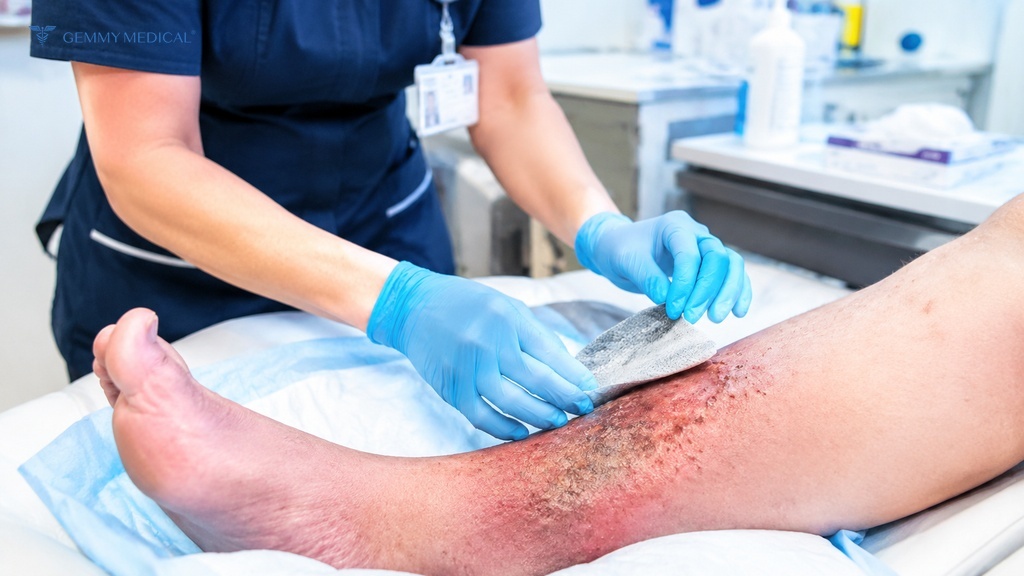
What is Silver Alginate Dressing?
Silver alginate dressings are advanced wound care products designed to manage infected wounds and prevent bacterial colonization. These dressings are composed of alginate, a natural polysaccharide derived from seaweed, combined with ionic silver, renowned for its broad-spectrum antimicrobial properties. This combination creates a dressing that not only absorbs wound exudate but also delivers sustained antibacterial action.
Silver alginate dressings are particularly valuable for managing moderate to heavily exuding wounds, such as pressure ulcers, diabetic foot ulcers, and post-surgical wounds at risk of infection. Their dual-action design—moisture control and bacterial reduction—makes them a cornerstone in modern wound care protocols.
At Gemmy Medical, headquartered in Shanghai, China, we offer a range of silver alginate dressings tailored to meet the needs of healthcare professionals globally, including in the United States, Europe, and Southeast Asia.
How Does Silver Alginate Dressing Work?
The mechanism of action for silver alginate dressings revolves around three critical functions: exudate absorption, ionic silver release, and moist wound environment maintenance. When applied to an exuding wound, the alginate component interacts with wound fluid to form a gel-like substance, which helps maintain a moist wound environment conducive to healing. At the same time, this gel traps and absorbs excess exudate, reducing the risk of maceration.
The silver ions embedded in the dressing are gradually released upon contact with wound fluid. These ions disrupt bacterial cell membranes, inhibit DNA replication, and interfere with essential enzymatic functions, leading to bacterial death. This sustained antimicrobial activity is particularly effective against common wound pathogens, including Staphylococcus aureus, Pseudomonas aeruginosa, and methicillin-resistant Staphylococcus aureus (MRSA).
By combining these functions, silver alginate dressings help reduce bioburden, manage infection, and create an optimal environment for wound healing.
Clinical Benefits of Silver Alginate Dressings
Silver alginate dressings offer numerous clinical benefits that make them a preferred choice for infected wound care:
- Antimicrobial Protection: The sustained release of silver ions provides continuous protection against a broad spectrum of bacteria, including antibiotic-resistant strains.
- Exudate Management: The alginate component absorbs large volumes of exudate, minimizing the risk of wound maceration and maintaining a balanced moisture level.
- Enhanced Healing Environment: By forming a moist gel upon contact with exudate, the dressing promotes granulation tissue formation and epithelialization.
- Reduced Dressing Changes: The long-lasting antimicrobial action reduces the frequency of dressing changes, improving patient comfort and lowering healthcare costs.
- Bioburden Control: By reducing bacterial load, these dressings minimize the risk of wound infection progression and complications such as sepsis.
These benefits make silver alginate dressings indispensable in managing complex and chronic wounds.
Ideal Candidates for Silver Alginate Dressings
Silver alginate dressings are suitable for a wide range of patients and wound types. They are particularly effective for:
- Infected Wounds: Any wound showing signs of infection, such as redness, swelling, increased exudate, or odor, can benefit from the antimicrobial properties of silver.
- Chronic Wounds: Pressure ulcers, diabetic foot ulcers, and venous leg ulcers that are slow to heal or at risk of infection are ideal candidates.
- Post-Surgical Wounds: Surgical incisions or trauma wounds at high risk of bacterial contamination can be effectively managed with silver alginate dressings.
- Burns: Partial-thickness burns with exudative surfaces are another indication for these dressings.
However, patients with known sensitivities to silver or alginate should avoid these dressings. Proper patient assessment and consultation with a wound care specialist are essential before initiating treatment.
How to Choose the Right Silver Alginate Dressing
Selecting the appropriate silver alginate dressing involves considering several factors:
- Wound Size: Choose a dressing size that sufficiently covers the wound bed without excessive overlap onto healthy skin.
- Exudate Levels: For heavily exuding wounds, opt for a thicker dressing with higher absorption capacity.
- Shape and Cutability: Some dressings are designed to conform to irregular wound shapes, such as cavities or undermined areas.
- Compatibility with Secondary Dressings: Ensure the chosen dressing works well with secondary layers, such as foam or gauze, to secure it in place.
Gemmy Medical offers a variety of silver alginate dressings designed to meet the diverse needs of healthcare providers and patients.
Application Best Practices
Proper application of silver alginate dressings is crucial for maximizing their therapeutic benefits:
- Wound Preparation: Cleanse the wound thoroughly with an appropriate wound cleanser or saline solution to remove debris and bioburden.
- Dressing Application: Place the silver alginate dressing directly onto the wound bed, ensuring full contact with the wound surface.
- Secure the Dressing: Use a secondary dressing, such as a foam or adhesive, to hold the silver alginate dressing in place.
- Monitor and Change: Monitor the wound regularly for signs of healing or complications. Change the dressing according to the manufacturer’s recommendations or when it becomes saturated.
- Dispose Responsibly: Dispose of used dressings in accordance with medical waste protocols to prevent cross-contamination.
Following these steps ensures the dressing performs optimally while minimizing risks to the patient.
Evidence Supporting Silver Alginate Dressings
Numerous clinical studies have validated the efficacy of silver alginate dressings in managing infected wounds. One study published in the International Wound Journal demonstrated that silver alginate dressings significantly reduced bacterial bioburden and promoted faster wound healing compared to standard dressings. Another trial highlighted their effectiveness in managing exudate and reducing odor in chronic wounds.
The antimicrobial properties of ionic silver have been extensively researched, with evidence showing its ability to combat both aerobic and anaerobic bacteria. Additionally, its sustained release mechanism ensures prolonged antimicrobial action, making it especially valuable for wounds with high infection risk.
Advantages for Healthcare Systems and Home Care
Silver alginate dressings offer significant advantages not only for clinical settings but also for home care:
- Cost-Effectiveness: By reducing infection rates and dressing change frequency, these dressings lower overall healthcare costs.
- Patient Comfort: Their ability to manage exudate and maintain a moist environment reduces pain and discomfort for patients.
- Ease of Use: The straightforward application process makes them suitable for use by both healthcare professionals and caregivers in home settings.
- Global Accessibility: Gemmy Medical’s silver alginate dressings are available worldwide, ensuring consistent supply for healthcare providers in diverse markets.
These attributes make silver alginate dressings a practical and effective choice for wound management across different care settings.
FAQ
What types of wounds are best suited for silver alginate dressings?
Silver alginate dressings are ideal for moderate to heavily exuding wounds, such as infected pressure ulcers, diabetic foot ulcers, venous leg ulcers, and post-surgical wounds. They are also effective for partial-thickness burns and traumatic wounds at risk of infection.
How often should silver alginate dressings be changed?
The frequency of dressing changes depends on the wound’s exudate levels and the manufacturer’s instructions. Typically, these dressings can remain in place for up to 7 days, but heavily exuding wounds may require more frequent changes.
Are silver alginate dressings safe for all patients?
While generally safe, silver alginate dressings should not be used on patients with known sensitivities to silver or alginate. They are also not recommended for dry wounds or wounds with minimal exudate, as they require moisture to activate.
Can silver alginate dressings be used under compression therapy?
Yes, silver alginate dressings are compatible with compression therapy and can be used effectively to manage exuding wounds in patients with venous insufficiency or lymphedema.
Do silver alginate dressings require a secondary dressing?
Yes, a secondary dressing is typically needed to secure the silver alginate dressing in place and manage additional exudate. Common options include foam dressings or adhesive bandages.
What precautions should be taken when using silver alginate dressings?
Always follow the manufacturer’s guidelines. Avoid using these dressings on dry wounds or those with minimal exudate. Additionally, consult a clinician if there are signs of worsening infection or if the wound does not improve over time.
Conclusion
Silver alginate dressings are a cornerstone of modern wound care, offering a unique combination of antimicrobial protection and exudate management. Their ability to create a moist healing environment while reducing bacterial bioburden makes them indispensable for managing infected and chronic wounds.
Gemmy Medical is committed to providing high-quality silver alginate dressings to healthcare professionals worldwide. By understanding their mechanism of action, clinical benefits, and proper application techniques, clinicians can significantly enhance patient outcomes while optimizing resource utilization.
Disclaimer: This article is for informational purposes only and does not replace professional medical advice. For product inquiries or customized solutions, contact the Gemmy Medical team at info@gemmytec.com.
How Does Silver Alginate Dressing Work?
Silver alginate dressings function through a synergistic combination of absorbing wound exudate and delivering antimicrobial action. The alginate fibers in the dressing react with wound fluid to produce a hydrophilic gel that covers the wound bed. This gel not only absorbs excess moisture but also creates a moist healing environment that is crucial for optimal wound repair. Moist wound environments have been shown in clinical studies to accelerate the healing process by promoting cellular migration, granulation tissue formation, and epithelialization.
The silver component, present as ionic silver, is activated upon contact with wound exudate. These ions exhibit a broad-spectrum antimicrobial effect by targeting various bacterial structures and processes. For example, silver ions bind to bacterial cell walls, destabilizing their membranes and leading to cell lysis. They also inhibit bacterial enzyme systems and prevent DNA replication, effectively halting bacterial proliferation. This makes silver alginate dressings highly effective against both gram-positive and gram-negative bacteria, including resistant strains like MRSA and VRE.
By combining these mechanisms, silver alginate dressings not only address the immediate challenge of infection but also create conditions that support long-term wound healing. For healthcare providers, this dual-functionality reduces the complexity of wound management by consolidating infection control and wound care into a single product.
Clinical Benefits of Silver Alginate Dressings
The clinical advantages of silver alginate dressings extend well beyond just antimicrobial protection. These dressings improve patient outcomes by addressing key challenges in wound care:
- Odor Management: Chronic wounds can produce unpleasant odors due to bacterial activity. The antimicrobial action of silver ions reduces odor by targeting odor-causing bacteria.
- Pain Reduction: By maintaining a moist wound environment, silver alginate dressings reduce the pain associated with desiccation and dressing changes. This is particularly beneficial for patients with fragile skin or extensive wounds.
- Versatility: Silver alginate dressings are suitable for use in various anatomical locations and wound types, from superficial abrasions to deep cavity wounds. Their conformability ensures consistent coverage and efficacy.
- Reduced Risk of Complications: Infection control is critical to preventing complications such as cellulitis, sepsis, or chronic wound deterioration. Silver alginate dressings minimize these risks by actively reducing bacterial load.
These multifaceted benefits make silver alginate dressings a cornerstone in both inpatient and outpatient wound care settings, ensuring both clinical and economic advantages.
Ideal Candidates for Silver Alginate Dressings
While silver alginate dressings are highly versatile, certain patient populations and wound types stand out as particularly suitable candidates:
- Patients with Diabetes: Diabetic foot ulcers are a common complication in individuals with diabetes and are prone to infection due to poor circulation and immune system dysfunction. Silver alginate dressings help manage bacterial colonization and support healing in these complex wounds.
- Older Adults: Elderly patients often experience pressure ulcers due to prolonged immobility and thin skin. The antimicrobial and exudate management properties of silver alginate dressings make them ideal for these wounds.
- Trauma Victims: Patients with open wounds resulting from accidents or surgical interventions are at high risk for bacterial contamination. Silver alginate dressings provide immediate antibacterial action, reducing the risk of infection.
- Immunocompromised Patients: Wounds in individuals undergoing chemotherapy, immunosuppressive therapy, or suffering from conditions like HIV/AIDS require extra infection control measures. Silver alginate dressings are an effective option due to their broad-spectrum antimicrobial activity.
Clinical evaluation, including wound assessment and patient history, should be conducted to determine the appropriateness of silver alginate dressings for each case.
How to Choose the Right Silver Alginate Dressing
Choosing the correct silver alginate dressing is critical to its effectiveness. Here are some additional considerations:
- Duration of Use: Some silver alginate dressings are designed for extended wear, while others may need more frequent changes. Consider the wound’s healing trajectory and exudate levels when selecting a product.
- Patient Mobility: For patients who are active or frequently repositioned, choose dressings with stronger adhesive properties or compatibility with secondary fixation systems.
- Manufacturer Reputation: Opt for products from reputable manufacturers like Gemmy Medical that adhere to international quality standards and provide clear usage guidelines.
- Wound Depth: For deep or cavity wounds, select dressings that can be packed into the wound bed for complete coverage and optimal efficacy.
By matching dressing characteristics to individual patient needs, clinicians can ensure better outcomes and cost-efficient care.
Application Best Practices
Proper application is essential for the success of silver alginate dressings, and the following tips can enhance clinical efficacy:
- Avoid Overlapping: Ensure the dressing covers only the wound bed and not surrounding healthy tissue, as this minimizes potential irritation or wastage of the dressing material.
- Monitor Signs of Infection: During dressing changes, assess the wound for signs of increased infection, such as pus, discoloration, or worsening inflammation, and adjust treatment protocols accordingly.
- Use Sterile Tools: Always use sterile instruments and gloves during application to maintain a clean wound environment and prevent secondary infection.
- Educate Caregivers: If the dressing is being applied at home, ensure caregivers are trained in proper techniques and can recognize signs of complications.
These best practices not only maximize the therapeutic benefits of silver alginate dressings but also contribute to better patient compliance and satisfaction.
Real-World Applications of Silver Alginate Dressings
Silver alginate dressings have been successfully used in a variety of clinical scenarios, showcasing their versatility and efficacy:
- Post-Surgical Care: In a case study involving a patient with a surgical wound complicated by a MRSA infection, the use of silver alginate dressings significantly reduced bacterial counts and facilitated rapid healing.
- Burn Management: A hospital burn unit reported improved outcomes when using silver alginate dressings for partial-thickness burns compared to traditional methods. Patients exhibited faster epithelialization and reduced pain levels.
- Home Care for Chronic Wounds: A home care nurse using silver alginate dressings for a patient with a diabetic foot ulcer noted reduced odor and exudate levels after just two weeks of treatment, allowing the patient to return to daily activities.
These real-world applications demonstrate the adaptability of silver alginate dressings in diverse care settings, from acute hospital environments to long-term home care.


